

|
|
|
| HomeAbout Billiards DigestContact UsArchiveAll About PoolEquipmentOur AdvertisersLinks |
|
Browse Features
Tips & InstructionAsk Jeanette Lee Blogs/Columns Stroke of Genius 30 Over 30 Untold Stories Pool on TV Event Calendar Power Index |
Current Issue
BCA Hall of Fame Class of 2026: Corey Deuel | The Mad Scientist The table has always been a laboratory for Corey Deuel, pool's most inquisitive and analytical player. By Keith Paradise Dee Atkins was sound asleep when he was woken up in the middle of the night by a familiar disturbance. “Hey wake up,” said Corey Deuel. “You have to see this.” By this point, Atkins was used to this. Deuel had moved in with Atkins and his family in Ohio and had become like another brother, with Atkin's mother shuttling the two teenagers to pool tournaments throughout the region while Deuel used the family's pool table as equal parts training ground and laboratory. He would emerge from the gameroom with pages of notes that he had taken on experiments on how billiard balls would react to spin or speed. The family owned a construction company and Atkins would wake up at 4 a.m. most days to begin work, only to find Deuel was still up from the night before and putting in practice. “I had never in my life seen anything like what he was doing,” said Atkins. “So, I knew right then that this wasn't just another player. This was something obviously that pool had never seen.” 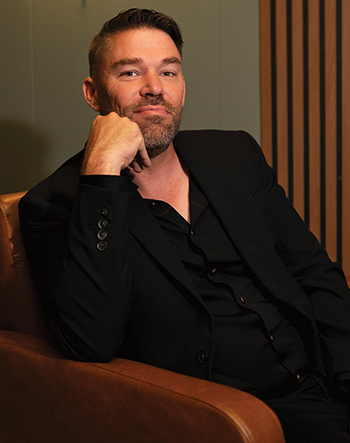 (Photo By Adam Peter Suguitan) In a career that has spanned nearly three decades, Deuel has earned numerous titles in multiples disciplines — including the U.S. Open 9-Ball Championship, a Derby City Classic one-pocket title, a U.S. Open Bar Table 8-Ball championship and a Billiard Congress of America Open 9-Ball Championship. He didn't win these tournaments as much as he solved them, using a scientific and analytical mind to figure out how a table was playing — and more specifically, how the table was breaking. In fact, there may not be a single player in the last quarter century who has spent as much time analyzing and experimenting with the nuance of the break shot as Deuel. “I mean, it is like he reinvented the game with the soft break,” said fellow Hall of Famer Darren Appleton, who defeated Deuel in the final of the 2010 U.S. Open 9-Ball Championship. “He was the first one to really introduce it, and then obviously everyone started doing it because obviously it's a benefit. But his knowledge of the game is incredible. He's like, for me, the American Efren Reyes when it comes to knowledge of the game and creativity and everything else.” For his success as well as his contributions to the game, Deuel was elected to the Billiard Congress of America Hall of Fame this summer and will be inducted during a ceremony this month during the Predator Pro Billiard Series in San Antonio, which will also see the induction of U.S. Open founder Barry Behrman and professional player and broadcaster Billy Incardona. Deuel was about 13 years old when he rode his skateboard to Drexeline Billiards, the Delaware County, Pennsylvania, poolroom outside Philadelphia that had just opened a couple of years before he had arrived. He had played the game a handful of times on a table that was at his neighbor's home and had walked away intrigued. So intrigued that he skated alone to Drexeline, walked in and met the owner, Bob Maidhof, who told him to prop his skateboard over in the corner then set up him with a table for him to practice on. “I had a lot of kids coming in and I wanted to try to send them down the right path,” said Maidhof, who will be introducing Deuel at the ceremony. “But there was something special about him. You could tell.” Maidhof had spent years on the road as a player himself before settling outside of Philadelphia and opening his room with tables he had been buying and storing over time. Shortly after opening, five-time world straight pool champion Jimmy Caras walked in to check out the place. Maidhof recognized Caras immediately, welcomed him to the room and told him how much he admired him as a player. Caras, without saying a word, walked out and did not return for a week. He eventually became a regular and over time developed a close friendship with Maidhof. When the teenaged Deuel started frequenting the room, Caras took a quick liking to the boy and became a mentor, with the two of them playing straight pool every Saturday and imparting his wisdom of the balls and how they react. Caras talked specifically to Deuel about combination shots, which led to him ultimately looking at the break shot as just a big combination shot, with different types of spin and speeds causing the balls to react differently. When Caras wasn't there, Deuel was on a table until the wee hours of the morning experimenting with the break shot under different types of speeds. Occasionally, Maidhof and Deuel would venture downtown to a poolroom in South Philadelphia, where he would play and receive more mentorship, this time from Mike LeBron, former U.S. Open 9-Ball champion. After a few years of being mentored by the Philadelphia area legend, Deuel began venturing out on road trips with LeBron, mostly to match up with other players in money games because he was still too young to play in professional events. During these road trips Deuel met Adkins. After a few years playing locally, Deuel was looking for a change scenery and took a bus to West Jefferson, Ohio, to stay with Adkins and his parents for a week. That ultimately stretched into a year, and then another year. And then another year. He ultimately stayed for seven years, exploring the outdoors with the family and even helping Dee out at construction sites. “He worked about two days,” said Adkins. “I never saw him practice harder after those two days.” In 1997, Deuel won the Viking 9-Ball Tour and two years later, he placed fifth at the U.S. Open. He was feeling so good about his performance that he asked fellow player Shannon Daulton what odds he would give on Deuel winning his next tournament. “20 to one,” said Daulton. 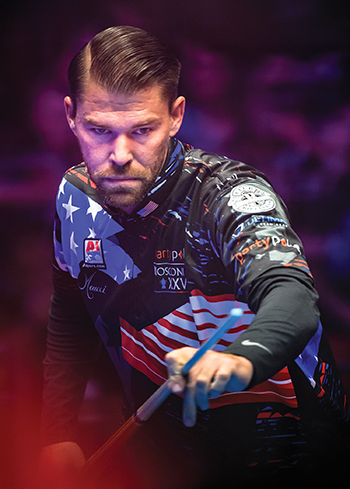 Few players have studied the game like Deuel. At the next event, the Camel Milwaukee 9-Ball Open, Deuel — using the infamous “soft break” that he developed, won his first professional event, defeating Earl Strickland in the finals. So frustrated was Strickland with the breaking ploy that he quit mid-match, forfeiting. Deuel said he came up with the idea for soft breaking after observing how tight the racks were becoming thanks to the new technology that had been rolled out, specifically the Sardo rack, which was leaving almost every ball frozen. While most other players continued to hit the rack as hard as possible, Deuel noticed he could do the opposite and make the corner ball almost every time, allowing him to focus on landing shape for his next shot. The theory reflected back to those days of playing with Jimmy Caras, with the rack simply resembling a combination shot. “I just thought of the break as more of a combination shot than really, you know, a power shot,” said Deuel. “I thought of it more in terms of just a combination. I want to make a good combination and play position on the next ball. If you play 9-ball and your opponent is just slamming them trying to get lucky and you're making a ball and getting playing position, you got an advantage over that guy, right?” “You know, all of us at times varied the speed we had to break with,” said former U.S. Open champion and Hall of Famer Nick Varner. “But nobody ever thought about hitting them four miles an hour. He was in a category by himself there.” Deuel would win once more on the Camel Tour that year, the Time Warner Cable Open, and played in his first Mosconi Cup a year later. 2001 would be one of the biggest of his career, winning the Sands Regency Open, the BCA and the Greater Columbus Open. The pinnacle of his career came late that year when he won his lone U.S. Open 9-Ball title, pitching an 11-0 shutout against future Hall of Famer Mika Immonen in the final. One would think that as Deuel built his commanding and ultimately insurmountable lead against Immonen that he would become calmer and more confident as the match progressed, yet the exact inverse happened. He became more restless, recognizing how bad it would look if he blew the lead and lost the match. “Once I started to get that big lead on Mika, I know how good Mika is,” said Deuel. “I mean, he's drummed me so many times. He'll hit this gear. So, all I could think about was 'Don't dog the biggest lead in the U.S. Open history.' That's all I could think about every shot.” As he continued to win, Deuel continued to experiment with his breaking to develop more knowledge, factoring in the ball composition, humidity in the room and what the weather conditions were like outside. At tournaments, his practice table became one of the most watched as fellow competitors watched how he was breaking to try and determine how they should try to break as well. Aaron Czetli, who has dabbled in the game as a player, stake horse and had a billiards media company, had Deuel living with him while he trained for the International Pool Tour, the 8-ball venture founded 20 years ago by entrepreneur Kevin Trudeau. For a month straight, Deuel racked the balls in numerical order on the pool table in the basement of the law firm that Czetli worked at, broke the rack and charted where each ball landed. “He's tried to teach me stuff about the rack and the break and everything like that and then I realized he was at another level,” said Czetli. “The stuff Corey was teaching me was hurting my brain.” Over time, promotors began changing the breaking rules in response to the new breaking style, first creating the “three-point rule” that required three balls to travel past the head string, and then racking with the 9 ball onto the spot in an attempt to bring back the more powerful break shot. Although he wasn't mentioned directly in many of these rule changes, there was not much investigation needed to determine why these changes were being made. Today, Deuel doesn't compete as much as he used to but that doesn't mean that he can't, having won the Americas Heyball Championship last year. Still, he wasn't sure that his career would be considered Hall of Fame worthy until he received the call this summer. “I went to breakfast after I got the call and I think I skipped the whole way,” he said. “It was pretty cool. One of the coolest things that's happened to me in my pool career.” |

|
Since 1978, Billiards Digest magazine has been the pool world’s best source for news, tournament coverage, player profiles, bold editorials, and advice on how to play pool. Our instructors include superstars Nick Varner and Jeanette Lee. Every issue features the pool accessories and equipment you love — pool cues, pool tables, instruction aids and more. Columnists Mike Shamos and R.A. Dyer examine legends like Willie Mosconi and Minnesota Fats, and dig deep into the histories of pool games like 8-ball, 9-ball and straight pool.
Copyright © 1997 - 2025 Billiards Digest
All Rights Reserved
Luby Publishing, Inc.
310 Busse Highway PBM #319 | Park Ridge, IL 60068
Phone: 312-341-1110 | Fax: 312-341-1469