You’ve got to hand it to the Chinese billiard manufacturers because, well, because they’ve been handing it to the players!
In the past five or six years, the Chinese billiard market — already huge, as a market with a billion and a half people might support — has exploded, first with the marketing muscle of billiard manufacturing giant Joy Billiards and more recently with development of Duya as a competitive manufacturer/promoter.
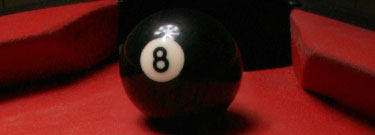
First, Joy launched its brilliant rebranding of Chinese 8-Ball — traditional 8-ball played on 9-foot snooker-style table — as “Heyball” (which is the Chinese term meaning Black Ball). They’ve poured millions of dollars into the development and acceptance of the discipline through massive tournament prize funds and additional financial assistance in bringing players from around the world to China to compete and help establish the game’s credibility. Not surprisingly, the growth has shifted the market in China heavily toward Joy Heyball tables. The company’s efforts in courting the International Olympic Committee (IOC) and other federations with connections to the Olympic movement have been impressive. And their efforts have been further bolstered by the all-too-willing acceptance of their product by the World Pool Association (WPA).
On the heels of Heyball’s success, the innovative Duya Billiards Company developed its own game — Golden Nine — as a tool through which it markets its own unique brand of aluminum alloy tables. The company has managed to garner a ton of attention of its own based on its lucrative Golden Nine tour, anchored by four $800,000 tournaments and a massive $2.3 million “Global Final,” this year with the biggest top prize ever offered in a pool tournament — $1.5 million. All told, Duya’s five major Golden Nine events paid out $5.5 million. (Equally impressive, the prize fund for the Global Finals jumped from $1.5 million to $2.3 million through the last-minute sponsorship support and a large Chinese wine manufacturer, the type of non-endemic sponsor pool has craved since forever.)
Not surprisingly, the growth of billiards in China has been staggering. The Chinese billiard industry is said to be worth more than $12 billion, a number that is expected to double over the next four years.
This month’s cover features the winner of the incredible top prize — two-time WPA World Pool Champion Jiaqing Wu, born in Chinese Taipei but now living in Beijing. The once-pudgy left-hander won both of his WPA world titles (9-ball and 8-ball) in 2005, when he was just 16 years old. Ardent pool fans the world over have been huge admirers of Wu ever since, despite various setbacks that have taken Wu out of pool circulation on and off for the past 20 years. His level of talent is deemed by many to be almost unmatched, and despite his absence over the years Wu is still generally considered among the top five players in the world.
But while Wu’s win in Beijing was the biggest ever in the sport, the hope is that there is more where that came from — for everyone. The Chinese seem to be poised to raise the bar even further. In doing so, both Heyball and Duya have already impacted American pool with some of the sport’s top players (particularly Asians, like the Ko brothers) jumping ship and banking their futures on Chinese pool money. But the overall hope is that the trickle down will benefit every discipline and every corner of pool’s world.
The question, of course, is whether the meteoric boom in China is sustainable. No doubt both Joy and Duya have hopes (and likely a plan) for global expansion of those games, although cursory efforts by Joy over the past few years have been met with lukewarm response.
Either way, a rising tide, as they say, lifts all ships. Let’s hope the cue games everywhere rise to the occasion.