

HomeAbout Billiards DigestContact UsArchiveAll About PoolEquipmentOur AdvertisersLinks
BD House Pro
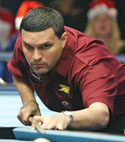
Tony Robles
A longtime teaching pro at Amsterdam Billiard Club in New York City, Tony has dozens of regional and national titles to his name, including the 2004 BCA Open Championships.


Instruction Articles:
 
Position: Four Square
February 2009
Let’s Check the mailbag ...

Dear Tony: I have tapes of great matches from Accu-Stats, but what is it that I’m supposed to be watching in order to improve? — J. Russano; Akron, Ohio

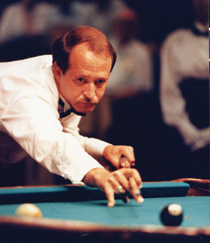
Watch the best (like Mike Sigel) to see how you’d play the same shots.
The one thing you should always do when you’re watching tapes or DVDs is whenever the balls are broken and a player is about to take the first shot, pause the video and ask yourself, “What would I do here?” And try to see if the player will do what you decided to do. You’ll be surprised how many times you are right, and how many times you’ll see a shot you didn’t think of and you’ll be excited to go to the table to practice it. That is how I learned pattern play in straight pool. I used to watch the 150-ball run that Mike Sigel had against Mike Zuglan (at the 1992 U.S. Open 14.1 Championship), and I would pause it to see if I could figure out what he was going to do and what I would do, and what the difference was. And even though he ran 150, I actually disagree with a few decisions that Sigel made. But it’s because everybody has a different style of play. There were a couple of runs there that could have been a lot easier. He made them a little tough on himself, but he got away with it.

Dear Tony: How long should someone practice every day? — E. Hudson; Queens, N.Y.

It all depends what level that person wants to achieve. If that person wants to get to the top level, and he has the time, then he should practice as much as he possibly can. If it’s someone who plays for fun and wants to improve a little bit, at least an hour a day would do. But either way you go, whether it’s practicing eight hours a day or one or two hours a day, the quickest way to shave years off the learning process is to focus on your weaknesses — the shots you struggle with the most. When you do that, you get to the point where you start improving at a more rapid pace. You’re getting all the weak shots out of the way and turning them into strengths that you can add to your game. But if you have a guy who never practices a weakness, every time that shot comes up at hill-hill, he’ll be scared to death to shoot it. And 99.9 percent of the time, he’ll miss the shot.
Featured Video: Harriman's Drawing
(courtesy Accu-Stats)
MORE VIDEO...

alchemy_135x127